
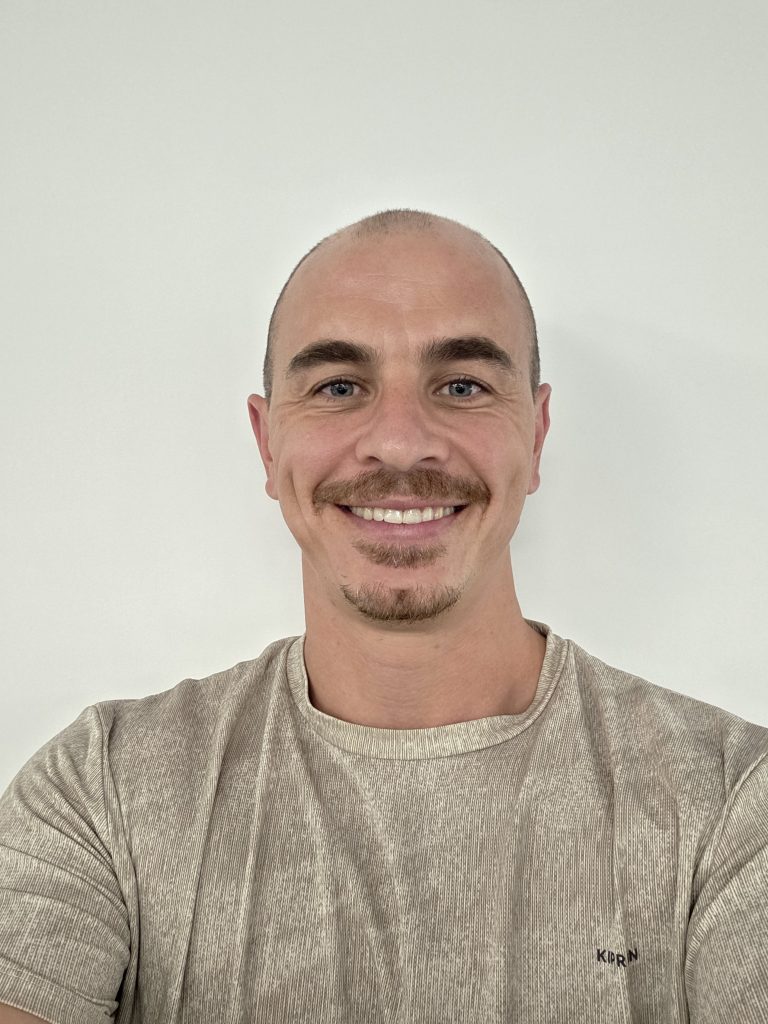
Andrea
Positive Behaviour Support Practitioner
Andrea is a Positive Behaviour Support (PBS) Practitioner at YesAbility, based in the Midwest. He holds a Diploma in Positive Behaviour Support, a Diploma of Counselling, a degree in Training and Education Science, and qualifications as a Healthcare Assistant. Andrea has more than 10 years of experience across disability support, education, and behaviour support roles in Italy, Australia, and the United Kingdom. He can provide support in both English and Italian.
Andrea’s practice is grounded in person-centred support and the principles of Positive Behaviour Support. He has experience developing PBS plans, monitoring progress over time, and refining strategies in partnership with participants, families, and support teams to ensure supports remain practical, relevant, and aligned with a person’s goals. He is confident supporting people with complex needs and is particularly skilled at strengthening consistent implementation through staff training, coaching, and clear, values-aligned guidance.
Andrea also incorporates visual communication approaches to support engagement, learning, and day-to-day understanding. He uses practical tools such as visual aids and structured planning methods to make strategies easier to follow across home, school, work, and community settings. Andrea holds a Positive Behaviour Support Diploma (Level 5, BILD UK), along with qualifications in counselling, education, and disability support.
The values I strive to honour every day as a Positive Behaviour Support Practitioner are collaboration and uniqueness.
For me, collaboration is at the heart of meaningful outcomes. I often think of the red Amazonian ants that come together during storms, forming a living raft to survive and protect one another. In the same way, PBS works best when everyone moves as one team. As practitioners, we help bridge the gap between the participant, their family, support staff, and the broader multidisciplinary team. When we work as one united body, we can create lasting positive change.
Uniqueness is equally important. Effective strategies come from genuine curiosity about a person’s strengths, interests, goals, and experiences. I believe support should be co-designed with the participant and the people closest to them, because when people are actively involved in creating solutions, they are more motivated and empowered to make them work.
My “why” is simple: helping people feel valued and important. Seeing someone feel understood, included, and appreciated gives me the same feeling in return. We all need to know that we matter, and that’s what drives my work every day.
Location: Midwest